By Scott’s Auto Repair | Norco | 951.207.4387
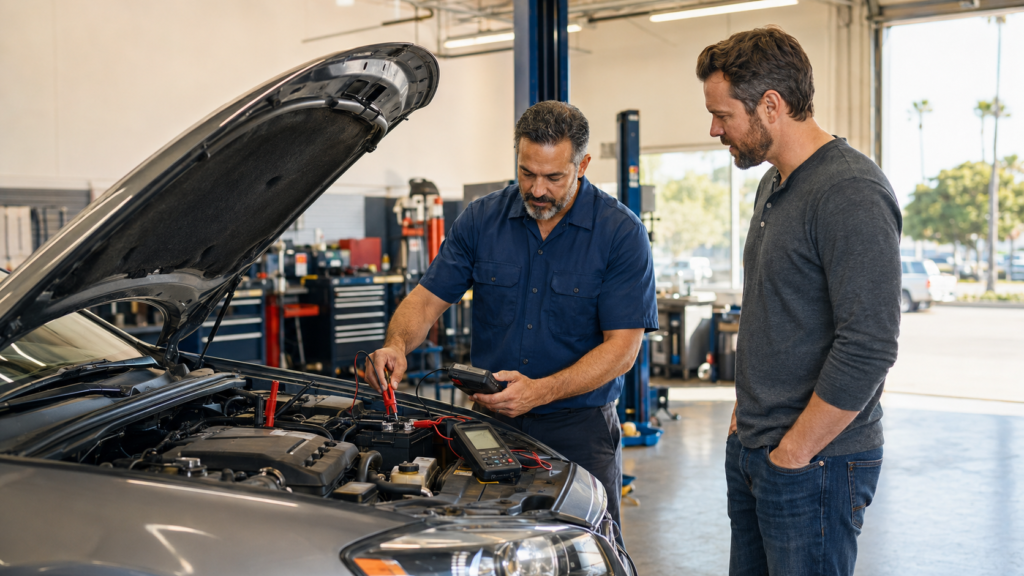
You turn the key or press the start button, but your vehicle refuses to start. Perhaps you hear rapid clicking, one loud click, slow cranking, or nothing at all. In other cases, the engine may turn over normally without actually starting.
A car that won’t start can disrupt your commute, leave you stranded, and create uncertainty about what needs to be repaired. Although a dead battery is a common cause, it is not the only possibility. Starting problems may also involve the starter, alternator, ignition system, fuel delivery, security system, electrical connections, or internal engine components.
The sound and behavior of the vehicle can provide useful clues, but proper testing is necessary to identify the actual cause. Replacing parts based on a guess can waste money and leave the original problem unresolved.
If your vehicle is experiencing a starting problem, call Scott’s Auto Repair in Norco at 951.207.4387 to schedule professional diagnosis and repair.
🚗 What Happens When You Start Your Car?
Several systems must work together before an engine can start and continue running.
When you turn the key or press the start button, the battery supplies electrical power. The starter motor turns the engine, allowing it to draw in air and fuel. A gasoline engine’s ignition system must create a spark at the correct time, while the fuel system must deliver the proper amount of fuel. The vehicle’s computer, sensors, security system, and electrical circuits must also communicate correctly.
If any essential part of this sequence fails, the result may be a no-start condition.
Pay attention to what the vehicle does when you attempt to start it. Dashboard lights, clicking sounds, cranking speed, warning messages, and recent changes in performance can all provide useful diagnostic clues.
🔋 1. A Weak or Dead Battery
A weak battery is one of the most common reasons a vehicle will not start. The battery must provide enough power to operate the starter motor and the vehicle’s electrical systems.
Possible signs of a weak or discharged battery include:
- Rapid clicking when you turn the key
- Slow or labored engine cranking
- Dim headlights or interior lights
- A blank or flickering dashboard
- Electrical accessories that do not work
- A vehicle that starts with assistance but will not restart later
A battery may lose its charge because of age, heat, an electrical drain, loose connections, a charging-system problem, or accessories being left on.
A jump-start may get the vehicle running temporarily, but it does not determine why the battery lost its charge. The battery and charging system should be tested to help prevent another no-start situation.
If you believe you have a dead car battery in Norco, contact Scott’s Auto Repair at 951.207.4387.
⚡ 2. Loose or Corroded Battery Connections
The battery may contain sufficient energy, but that power cannot reach the starter when the cables or terminals have a poor connection.
Corrosion can develop around battery terminals and create electrical resistance. Connections may also become loose, damaged, or contaminated. Ground cables and other high-current connections can produce similar symptoms when they deteriorate.
Possible signs include:
- Intermittent starting
- Clicking without cranking
- Dashboard lights that flicker
- Visible corrosion around the battery terminals
- A vehicle that starts sometimes but not consistently
Battery corrosion should be handled carefully. Batteries contain hazardous material and may produce flammable gas. If you are uncertain about safe inspection or cleaning procedures, leave the work to a trained technician.
🛠️ 3. A Failing Starter Motor
The starter is an electric motor that turns the engine during the starting process. If it fails, the engine may not crank even when the battery is charged.
Symptoms of a bad starter may include:
- A single click when attempting to start
- Repeated starting problems
- No engine movement despite working lights
- Intermittent cranking
- Unusual grinding or whirring noises
- Smoke or a burning smell near the engine compartment
A click does not automatically prove that the starter is faulty. Weak battery power, damaged cables, a failing relay, an ignition-switch problem, or a poor ground connection can create similar symptoms.
Testing the starting circuit is important before replacing the starter.
🔄 4. Alternator or Charging-System Problems
The alternator supplies electrical power while the engine is running and replenishes the battery. If the charging system is not working correctly, the battery may gradually discharge until it no longer has enough power to start the vehicle.
Possible signs of a charging-system problem include:
- A battery or charging warning light
- Dim or unusually bright lights
- Electrical accessories behaving erratically
- The engine stalling while driving
- A new battery repeatedly losing its charge
- Whining or grinding near the belt-driven accessories
A vehicle that starts after a jump but dies shortly afterward may have a charging-system problem, although testing is necessary to confirm the cause.
Installing another battery without checking the alternator, wiring, belt, and charging voltage may provide only a temporary solution.
⛽ 5. Fuel-Delivery Problems
An engine needs the correct amount of fuel to start. If the engine cranks normally but does not fire, the fuel system may not be delivering sufficient fuel.
Potential causes include:
- A failed fuel pump
- A damaged fuse or relay
- A restricted fuel filter
- Faulty fuel injectors
- Wiring or control-circuit problems
- Contaminated or incorrect fuel
- An inaccurate fuel-level reading
- An empty fuel tank
Some drivers listen for a brief fuel-pump sound when the ignition is switched on, but the absence or presence of that sound does not provide a complete diagnosis. Fuel pressure, volume, electrical control, and injector operation may require professional testing.
🔥 6. Ignition-System Problems
Gasoline engines require a properly timed spark to ignite the air-fuel mixture. Worn spark plugs, failed ignition coils, damaged wiring, sensor faults, or other ignition problems can prevent an engine from starting.
Possible warning signs include:
- Engine cranking without starting
- Rough running before the no-start condition
- Misfiring
- Hesitation
- Poor acceleration
- Reduced fuel economy
- An illuminated check engine light
An ignition problem may affect one cylinder or prevent the entire engine from operating. Diagnostic trouble codes can provide useful clues, but they should be supported by appropriate testing.
📡 7. Crankshaft or Camshaft Sensor Failure
The engine computer uses crankshaft and camshaft position sensors to determine engine speed and the position of internal components. This information helps control ignition timing and fuel injection.
If a critical position sensor or its circuit fails, the engine may crank but not start. In some cases, the vehicle may stall while driving and refuse to restart until it cools.
Possible symptoms include:
- Intermittent stalling
- Extended cranking
- A check engine light
- Rough performance
- Sudden loss of power
- Cranking without starting
These symptoms overlap with many other problems. Reviewing computer data and testing the sensor circuits can help determine whether a position sensor is responsible.
🔐 8. Security System or Key Recognition Problems
Modern vehicles frequently use an immobilizer or electronic security system designed to prevent unauthorized starting. If the vehicle does not recognize the key or key fob, it may disable the starter, fuel system, or ignition.
Possible signs include:
- A flashing security indicator
- A “Key Not Detected” message
- The engine starts and immediately shuts off
- The starter does not respond
- The vehicle starts with one key but not another
- Key-fob functions are intermittent
A weak key-fob battery may be involved, but security-system faults, damaged keys, communication problems, and programming issues are also possible.
Consult the owner’s manual for the manufacturer’s approved emergency starting procedure. Do not attempt to bypass the immobilizer.
🕹️ 9. Transmission Range or Clutch-Switch Problems
Automatic vehicles are generally designed to start only when the transmission is in Park or Neutral. If the range sensor or related linkage is not reporting the correct position, the starter may not operate.
Confirm that the shifter is fully in Park. In some cases, attempting to start in Neutral may help identify a possible range-related problem, but this is not a repair.
Manual-transmission vehicles commonly use a clutch safety switch that requires the clutch pedal to be pressed before starting. A failed or misadjusted switch may prevent the starter from operating.
🔌 10. Blown Fuses, Faulty Relays, or Wiring Problems
The starting, ignition, fuel, and engine-control systems depend on fuses, relays, connectors, grounds, and wiring. A single electrical fault can interrupt the starting sequence.
Potential electrical causes include:
- A blown fuse
- A failed starter or fuel-pump relay
- Damaged wiring
- Loose connectors
- Poor ground connections
- Rodent damage
- Water intrusion
- Previous improper repairs
- Aftermarket accessory problems
Installing a larger fuse or repeatedly replacing a blown fuse is unsafe. A blown fuse may indicate an electrical overload or short circuit that requires professional diagnosis.
🌡️ 11. Temperature-Related Starting Problems
Extreme heat or cold can expose a weak battery, failing starter, deteriorated wiring connection, or marginal sensor.
Hot weather can be especially demanding on batteries. A vehicle may start normally for months and suddenly fail when temperatures rise because the battery no longer has adequate capacity.
A hot engine that will not restart may also have a heat-sensitive electrical component, sensor, fuel-delivery issue, or starter problem. Do not assume the weather itself is the sole cause.
Note whether the vehicle fails only when cold, only after being driven, or after sitting for a particular amount of time. These details may help the diagnostic process.
⚙️ 12. Internal Engine or Timing Problems
Less commonly, a no-start condition may involve a mechanical problem inside the engine. The starter may turn the engine, but the engine cannot generate the compression or timing needed to run.
Possible causes include:
- A damaged timing belt or timing chain
- Low compression
- Internal engine damage
- Valve-train problems
- An engine that cannot rotate
- Severe overheating damage
An engine that suddenly cranks faster or sounds different than usual may have lost compression. Grinding, clunking, or a starter that cannot rotate the engine may indicate a serious mechanical issue.
Stop attempting to start the vehicle if you hear severe mechanical noises. Repeated cranking could cause additional damage.
👂 What Does the Starting Sound Tell You?
The sound you hear can provide clues, but it should not replace professional testing.
Rapid Clicking
Rapid clicking frequently points to low battery voltage or a poor electrical connection. The battery, terminals, cables, and charging system should be checked.
One Solid Click
A single click may involve the starter, solenoid, battery cables, relay, or insufficient battery power.
Slow Cranking
Slow cranking can be caused by a weak battery, high resistance in the cables, a failing starter, incorrect oil, or an internal mechanical problem.
Normal Cranking Without Starting
If the engine turns at its usual speed but does not start, the problem may involve fuel delivery, ignition, engine-position information, security authorization, compression, or computer control.
No Sound at All
Complete silence may be related to the battery, ignition switch, start button, security system, transmission-range sensor, clutch switch, fuse, relay, wiring, or starter circuit.
🦺 What Should You Do When Your Car Will Not Start?
When a vehicle refuses to start, remain calm and make a few safe observations:
- Confirm the transmission is in Park or Neutral
- Press the brake or clutch pedal as required
- Look for dashboard warnings or security messages
- Turn off lights and unnecessary accessories
- Listen carefully when attempting to start
- Note whether the engine cranks
- Check whether the headlights appear unusually dim
- Avoid repeated, extended starting attempts
- Stop if you smell fuel, see smoke, or hear grinding
- Arrange professional service or towing when necessary
Do not work around moving engine components, create sparks near a battery, or touch damaged electrical wiring. Jump-starting can damage the vehicle or cause an injury when performed incorrectly.
If you are uncertain about the vehicle’s condition, call Scott’s Auto Repair at 951.207.4387.
🧪 Why Professional No-Start Diagnosis Matters
Many starting problems create similar symptoms, so testing is the most reliable way to identify the cause.
Professional diagnosis may include:
- Battery capacity and voltage testing
- Starting-system testing
- Charging-system evaluation
- Battery-cable voltage-drop testing
- Diagnostic trouble-code scanning
- Live computer-data analysis
- Fuel-pressure and fuel-control testing
- Ignition-system inspection
- Security-system evaluation
- Wiring and relay testing
- Compression or mechanical testing when necessary
A battery, alternator, or starter should not be replaced simply because it appears on a list of common causes. The goal is to identify the failed component or circuit and understand why it failed.
🛡️ How Can You Help Prevent Starting Problems?
Not every breakdown is preventable, but routine maintenance and early attention to warning signs can reduce the chance of an unexpected no-start condition.
Helpful habits include:
- Have the battery tested as it ages
- Keep battery connections clean and secure
- Address slow cranking promptly
- Pay attention to dashboard warning lights
- Follow the recommended maintenance schedule
- Replace worn spark plugs at the proper interval
- Repair charging-system concerns quickly
- Avoid leaving accessories on with the engine off
- Have intermittent starting problems diagnosed
- Keep a roadside-assistance plan available
A vehicle that starts only after several attempts is already warning you that something may be wrong. Do not wait until it stops starting completely.
📞 Schedule Starting-System Service with Scott’s Auto Repair
A vehicle may fail to start because of a weak battery, damaged connection, faulty starter, charging problem, fuel-delivery issue, ignition fault, sensor failure, electrical malfunction, or mechanical condition. The correct repair begins with an accurate diagnosis.
At Scott’s Auto Repair in Norco, your vehicle’s starting problem can be evaluated using professional testing and real-world mechanical experience. Whether the engine clicks, cranks slowly, turns without starting, or does nothing at all, identifying the cause is the first step toward dependable operation.
Call Scott’s Auto Repair at 951.207.4387 to schedule no-start diagnostics in Norco, battery testing, starting-system service, or professional auto repair.
Do not let an intermittent starting problem become a complete breakdown. Contact Scott’s Auto Repair in Norco today at 951.207.4387.
Leave a Reply