Category: Scott’s Auto Repair

  • 🛑 How Do You Know When Your Brakes Need Repair?

    By Scott’s Auto Repair | Norco | 951.207.4387
    How Do You Know When Your Brakes Need Repair?

    Your brakes are among the most important safety systems in your vehicle. Every time you slow down for traffic, stop at an intersection, descend a hill, or respond to an unexpected hazard, you depend on the braking system to work correctly.

    Brake components wear gradually, which can make changes in performance easy to overlook. A small squeak may become a loud grinding noise, a slight vibration may grow more noticeable, or the brake pedal may begin feeling softer over time. Waiting too long to address these symptoms can increase stopping distance, damage additional components, and create a serious safety concern.

    Knowing the common signs your brakes need repair can help you respond before a minor service need becomes a larger problem.

    If your brakes are making noise, vibrating, feeling different, or taking longer to stop the vehicle, contact Scott’s Auto Repair in Norco at 951.207.4387 to schedule a professional brake inspection.

    🚗 How Does Your Vehicle’s Braking System Work?

    When you press the brake pedal, the braking system converts the vehicle’s motion into heat through friction. In a typical disc-brake system, hydraulic pressure pushes the brake pads against the rotors. This friction slows the wheels and brings the vehicle to a stop.

    Depending on the vehicle, the braking system may include:

    • Brake pads
    • Brake rotors
    • Brake calipers
    • Brake fluid
    • Brake hoses and lines
    • A master cylinder
    • A brake booster
    • Wheel-speed sensors
    • An anti-lock braking system
    • Parking-brake components
    • Rear drum brakes on some vehicles

    All these components must work together. A noise or change in braking performance may involve worn pads, but it could also point to a rotor, caliper, hydraulic, sensor, or suspension problem.

    That is why a complete brake inspection in Norco is more reliable than replacing parts based on one symptom.

    🔊 1. Your Brakes Squeak or Squeal

    A high-pitched squeaking or squealing sound is one of the most familiar signs of possible brake wear.

    Some brake pads include wear indicators designed to make noise when the friction material becomes thin. This sound alerts the driver that the pads should be inspected and may need replacement.

    However, brake squeaking does not always mean the pads are completely worn out. Moisture, dust, surface rust, glazing, vibration, brake-pad material, or installation issues can also create noise.

    Occasional light noise after rain or when the vehicle has been parked may disappear after a few stops. Persistent, increasingly loud, or recurring squeaking deserves professional attention.

    Do not rely on noise alone to determine brake condition. Some worn pads may produce little or no warning before damage occurs.

    ⚙️ 2. You Hear Grinding When Braking

    A grinding sound should be treated as urgent. It may mean the brake-pad material has worn away enough for metal components to contact the rotor.

    Metal-on-metal contact can reduce braking effectiveness and quickly damage the rotors. It may also generate excessive heat and place additional stress on the calipers and other components.

    Grinding may have other causes, including debris, damaged hardware, or a mechanical problem, but it should never be ignored.

    If you hear grinding:

    • Reduce unnecessary driving
    • Avoid high speeds and heavy braking
    • Pull over if braking performance is affected
    • Arrange an inspection as soon as possible
    • Use towing if the vehicle does not feel safe

    Call Scott’s Auto Repair at 951.207.4387 for assistance with grinding brakes in Norco.

    🦶 3. The Brake Pedal Feels Soft or Spongy

    A healthy brake pedal should feel consistent and responsive. If the pedal feels unusually soft, spongy, or easier to push than normal, there may be air in the hydraulic system, deteriorated brake fluid, a leak, a failing hose, a master-cylinder problem, or another hydraulic fault.

    A pedal that gradually sinks toward the floor while you maintain pressure is also concerning.

    Brake-fluid leaks can reduce the hydraulic pressure needed to apply the brakes. Unlike engine oil, brake fluid is not consumed during normal operation. A low fluid level may indicate worn brake components or a leak that requires inspection.

    A significant change in pedal feel can be a safety emergency. If the pedal goes close to the floor, braking ability is reduced, or the vehicle does not stop normally, do not continue driving. Move to a safe location if possible and arrange towing.

    🧱 4. The Brake Pedal Feels Hard

    A brake pedal that is unusually difficult to press may indicate a problem with the brake booster, vacuum supply, hydraulic system, or another component.

    Drivers may notice that stopping requires much more physical effort than usual. The brakes may still respond, but the vehicle can become harder to control during an emergency stop.

    A hard pedal should not be dismissed as a minor comfort issue. Increased pedal effort may affect your ability to stop quickly and predictably.

    Schedule a professional inspection with Scott’s Auto Repair in Norco before the condition becomes worse.

    📳 5. The Vehicle Vibrates When You Brake

    A pulsing brake pedal or shaking steering wheel during braking can indicate a problem involving the brake rotors.

    Rotors can develop thickness variation, uneven wear, heat-related surface changes, or other conditions that affect how smoothly the brake pads contact them. A sticking caliper or improper wheel-fastener torque may contribute to rotor problems.

    Vibration can also be related to:

    • Worn suspension components
    • Steering-system problems
    • Tire or wheel issues
    • Loose or damaged components
    • Anti-lock brake operation during a hard stop

    Anti-lock brake pulsation during an emergency stop can be normal. Regular vibration during routine braking is not and should be inspected.

    The speed at which the vibration occurs and whether it is felt through the pedal, steering wheel, or entire vehicle can help a technician locate the cause.

    ↔️ 6. The Vehicle Pulls to One Side While Braking

    Your vehicle should remain reasonably straight and controlled when you apply the brakes. Pulling to one side may indicate uneven braking force.

    Potential causes include:

    • A sticking brake caliper
    • Contaminated brake-pad material
    • Uneven pad or rotor wear
    • A restricted brake hose
    • A hydraulic problem
    • Tire-pressure differences
    • Alignment or suspension concerns

    A severe pull can make the vehicle difficult to control, especially during sudden braking or on a wet road.

    Because steering, tire, suspension, and brake problems can produce similar symptoms, professional inspection is necessary to identify the source.

    ⏱️ 7. The Vehicle Takes Longer to Stop

    An increase in stopping distance is one of the most important warning signs of a braking problem. You may notice that you need to press the pedal earlier, apply more force, or leave more room than before.

    Reduced braking performance can be caused by:

    • Worn brake pads
    • Overheated brakes
    • Contaminated friction surfaces
    • Hydraulic problems
    • Poor-quality or incorrect components
    • A brake booster problem
    • Worn tires
    • Wet or slippery road conditions
    • Excessive vehicle weight

    If the vehicle does not slow down normally, treat the condition as urgent. Avoid driving the vehicle and arrange for professional service.

    Never test questionable brakes by driving at high speed or performing aggressive stops.

    💡 8. The Brake Warning Light Is On

    Vehicles may have several brake-related dashboard indicators. A red brake warning light can be associated with the parking brake, low brake-fluid level, or a hydraulic-system problem. An amber anti-lock braking system light may indicate a fault within the ABS.

    Some vehicles also provide an electronic brake-pad wear message.

    If a brake warning appears:

    1. Make sure the parking brake is fully released.
    2. Note the color and exact symbol.
    3. Pay attention to pedal feel and stopping performance.
    4. Consult the owner’s manual.
    5. Schedule an inspection promptly.

    If a red warning remains illuminated or appears with poor braking performance, stop driving when it is safe and arrange towing.

    A warning light should not be cleared or ignored without determining why it appeared.

    👃 9. You Smell Something Burning

    A sharp chemical or burning smell after repeated braking may indicate that the brakes are overheating. This can happen during prolonged downhill driving, aggressive braking, towing, or when a caliper or parking-brake component is sticking.

    Overheated brakes may temporarily lose effectiveness, a condition sometimes called brake fade.

    If you suspect overheating:

    • Pull over in a safe location
    • Stop the vehicle
    • Allow the brakes to cool naturally
    • Do not touch the wheels or brake components
    • Do not pour water on hot brakes
    • Seek professional assistance if the smell persists or braking changes

    Smoke near a wheel or an extremely hot wheel area may indicate a serious problem. Do not continue driving.

    🛞 10. One Wheel Produces Excessive Brake Dust

    Brake dust is a normal byproduct of friction, but a large difference between wheels can suggest uneven pad wear or a sticking caliper.

    A brake that does not release completely can remain in contact with the rotor. This may create excessive heat, rapid wear, reduced fuel economy, pulling, odors, or damage to nearby components.

    One wheel may also feel hotter than the others after driving, but never touch the wheel or brake assembly to check. Brake components can become hot enough to cause severe burns.

    A technician can compare brake wear, verify caliper movement, and inspect the hydraulic system safely.

    🔨 11. You Hear Clunking or Clicking

    Clicking, clunking, or rattling when the brakes are applied may involve loose or damaged brake hardware, improperly fitted pads, caliper movement, suspension components, or another mechanical issue.

    These sounds may become more noticeable when:

    • Changing direction
    • Driving over bumps
    • Applying or releasing the brakes
    • Turning
    • Braking at low speed

    Loose components can affect braking consistency and should be inspected before additional damage occurs.

    🅿️ 12. The Parking Brake Does Not Hold

    The parking brake helps keep a stationary vehicle from moving. Depending on the vehicle, it may be operated by a pedal, hand lever, or electronic switch.

    Signs of a parking-brake problem include:

    • The vehicle rolls when the brake is applied
    • The lever or pedal has excessive travel
    • The brake will not release
    • An electronic parking-brake warning appears
    • The parking brake operates intermittently
    • Grinding or dragging occurs after release

    Parking-brake systems can use cables, actuators, switches, motors, shoes, or caliper mechanisms. The correct inspection method depends on the vehicle design.

    Do not rely solely on the transmission’s Park position when a parking brake is not working correctly, especially on an incline.

    📏 How Long Do Brake Pads Last?

    There is no single replacement interval that applies to every vehicle. Brake-pad life depends on driving habits, vehicle weight, component design, road conditions, traffic, terrain, pad material, and maintenance.

    Brakes may wear more quickly when a vehicle is frequently driven in:

    • Stop-and-go traffic
    • Hilly areas
    • Heavy commuter traffic
    • Towing conditions
    • Delivery or commercial service
    • Short trips with repeated braking

    A driver who anticipates traffic and slows gradually may obtain different brake life than someone who brakes late and aggressively.

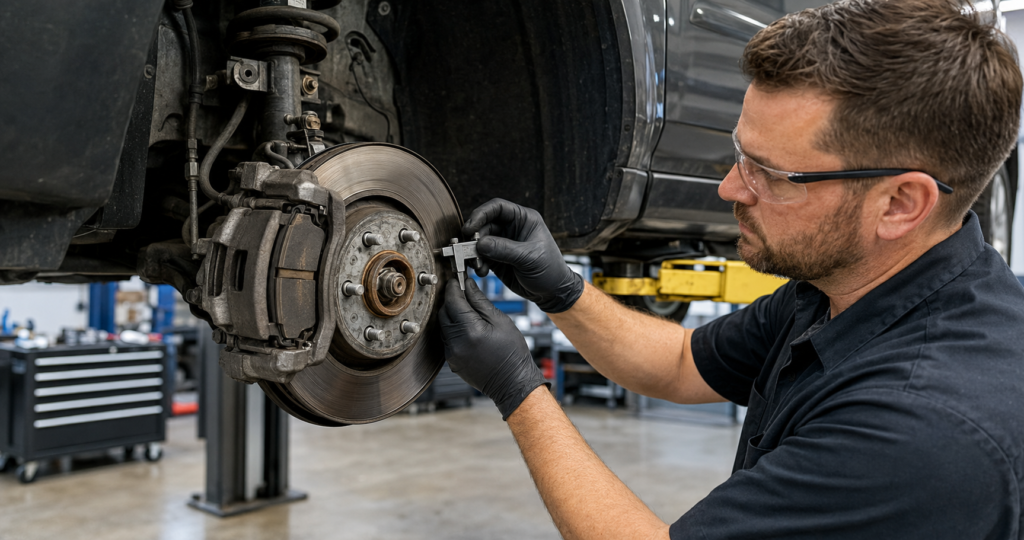
    Mileage alone should not determine whether brakes are safe. Measuring the remaining friction material and inspecting the complete system provides a more accurate assessment.

    🔍 What Happens During a Brake Inspection?

    A professional brake inspection may include evaluating:

    • Brake-pad or shoe thickness
    • Rotor or drum condition
    • Caliper operation
    • Brake-fluid condition and level
    • Hydraulic hoses and lines
    • Master-cylinder performance
    • Brake-pedal feel
    • Parking-brake operation
    • Warning lights and stored fault codes
    • ABS sensors and related wiring
    • Uneven wear patterns
    • Signs of leakage, overheating, or contamination

    A complete inspection helps determine whether the vehicle needs brake pads, rotors, hydraulic service, hardware, caliper work, or another repair.

    Not every brake noise requires the same service. Accurate inspection helps avoid unnecessary parts replacement while ensuring safety-related problems are addressed.

    🧰 Brake Pads, Rotors, and Calipers: What Is the Difference?

    Brake pads provide the friction material that presses against the rotors. They are designed to wear and require periodic replacement.

    Brake rotors are metal discs attached to the wheel hubs. The pads clamp against them to slow the wheels. Rotors must remain within safe thickness and condition specifications.

    Brake calipers use hydraulic pressure to apply the pads. A caliper that sticks, leaks, or fails to move correctly can create uneven wear and reduced braking performance.

    Replacing pads without inspecting the rotors, calipers, and hardware can leave an underlying problem unresolved. Brake service should be based on measurements, condition, and manufacturer specifications.

    🚫 What Happens If You Delay Brake Repair?

    Postponing brake service can allow a relatively manageable repair to become more extensive.

    For example, driving after the friction material has worn away can damage the rotors and possibly the calipers. A hydraulic leak can progress until the brake pedal loses pressure. A sticking caliper may overheat the rotor, damage the pad, and affect the wheel area.

    Delaying repairs may result in:

    • Longer stopping distances
    • Reduced vehicle control
    • Damage to additional components
    • Uneven brake wear
    • Overheated brakes
    • More expensive repairs
    • An increased risk of a collision

    Brake symptoms do not reliably improve on their own. If a sound or performance change appears, schedule an inspection.

    🛡️ How Can You Help Your Brakes Last Longer?

    Although brake components eventually wear, good driving and maintenance habits may help extend their service life.

    • Leave adequate following distance
    • Anticipate stops instead of braking suddenly
    • Avoid carrying unnecessary weight
    • Use an appropriate lower gear on long descents when recommended
    • Do not ride the brake pedal
    • Address pulling or dragging promptly
    • Maintain tires and suspension components
    • Follow the vehicle’s maintenance schedule
    • Have the brakes inspected when symptoms appear
    • Use components appropriate for the vehicle

    Never sacrifice safety simply to extend brake-pad life. Use the brakes whenever necessary to control the vehicle and avoid hazards.

    🚨 When Should You Stop Driving Immediately?

    Stop driving and arrange professional assistance if:

    • The brake pedal goes to the floor
    • The vehicle does not stop normally
    • A red brake warning remains illuminated
    • Brake fluid is leaking
    • You hear severe grinding
    • The vehicle pulls sharply under braking
    • Smoke comes from a wheel area
    • The brakes smell strongly burned
    • The pedal suddenly becomes extremely hard or soft
    • Braking control changes dramatically

    If braking ability begins to fail while driving, remain calm, activate the hazard lights, reduce speed safely, and move away from traffic when possible. Once stopped, do not continue driving the vehicle.

    📞 Schedule Brake Repair with Scott’s Auto Repair

    Squeaking, grinding, vibration, pulling, warning lights, unusual pedal feel, and increased stopping distance are all signs that your brakes may need professional attention.

    At Scott’s Auto Repair in Norco, your braking system can be inspected to determine which components require service. Addressing brake problems early can help protect rotors, calipers, hydraulic components, and—most importantly—the safety of everyone in the vehicle.

    Call us today at 951.207.4387 to schedule a brake inspection in Norco, brake-pad service, rotor evaluation, or professional brake repair.
  • 🔑 Why Won’t My Car Start? Common Causes of Starting Problems

    By Scott’s Auto Repair | Norco | 951.207.4387

    Why Won’t My Car Start? Common Causes of Starting Problems

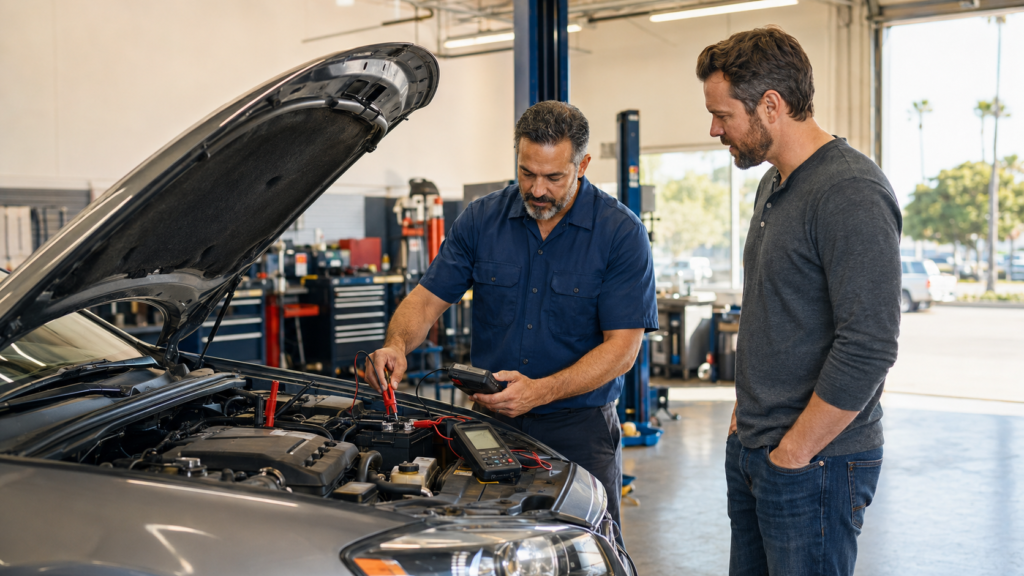
    You turn the key or press the start button, but your vehicle refuses to start. Perhaps you hear rapid clicking, one loud click, slow cranking, or nothing at all. In other cases, the engine may turn over normally without actually starting.

    A car that won’t start can disrupt your commute, leave you stranded, and create uncertainty about what needs to be repaired. Although a dead battery is a common cause, it is not the only possibility. Starting problems may also involve the starter, alternator, ignition system, fuel delivery, security system, electrical connections, or internal engine components.

    The sound and behavior of the vehicle can provide useful clues, but proper testing is necessary to identify the actual cause. Replacing parts based on a guess can waste money and leave the original problem unresolved.

    If your vehicle is experiencing a starting problem, call Scott’s Auto Repair in Norco at 951.207.4387 to schedule professional diagnosis and repair.

    🚗 What Happens When You Start Your Car?

    Several systems must work together before an engine can start and continue running.

    When you turn the key or press the start button, the battery supplies electrical power. The starter motor turns the engine, allowing it to draw in air and fuel. A gasoline engine’s ignition system must create a spark at the correct time, while the fuel system must deliver the proper amount of fuel. The vehicle’s computer, sensors, security system, and electrical circuits must also communicate correctly.

    If any essential part of this sequence fails, the result may be a no-start condition.

    Pay attention to what the vehicle does when you attempt to start it. Dashboard lights, clicking sounds, cranking speed, warning messages, and recent changes in performance can all provide useful diagnostic clues.

    🔋 1. A Weak or Dead Battery

    A weak battery is one of the most common reasons a vehicle will not start. The battery must provide enough power to operate the starter motor and the vehicle’s electrical systems.

    Possible signs of a weak or discharged battery include:

    • Rapid clicking when you turn the key
    • Slow or labored engine cranking
    • Dim headlights or interior lights
    • A blank or flickering dashboard
    • Electrical accessories that do not work
    • A vehicle that starts with assistance but will not restart later

    A battery may lose its charge because of age, heat, an electrical drain, loose connections, a charging-system problem, or accessories being left on.

    A jump-start may get the vehicle running temporarily, but it does not determine why the battery lost its charge. The battery and charging system should be tested to help prevent another no-start situation.

    If you believe you have a dead car battery in Norco, contact Scott’s Auto Repair at 951.207.4387.

    ⚡ 2. Loose or Corroded Battery Connections

    The battery may contain sufficient energy, but that power cannot reach the starter when the cables or terminals have a poor connection.

    Corrosion can develop around battery terminals and create electrical resistance. Connections may also become loose, damaged, or contaminated. Ground cables and other high-current connections can produce similar symptoms when they deteriorate.

    Possible signs include:

    • Intermittent starting
    • Clicking without cranking
    • Dashboard lights that flicker
    • Visible corrosion around the battery terminals
    • A vehicle that starts sometimes but not consistently

    Battery corrosion should be handled carefully. Batteries contain hazardous material and may produce flammable gas. If you are uncertain about safe inspection or cleaning procedures, leave the work to a trained technician.

    🛠️ 3. A Failing Starter Motor

    The starter is an electric motor that turns the engine during the starting process. If it fails, the engine may not crank even when the battery is charged.

    Symptoms of a bad starter may include:

    • A single click when attempting to start
    • Repeated starting problems
    • No engine movement despite working lights
    • Intermittent cranking
    • Unusual grinding or whirring noises
    • Smoke or a burning smell near the engine compartment

    A click does not automatically prove that the starter is faulty. Weak battery power, damaged cables, a failing relay, an ignition-switch problem, or a poor ground connection can create similar symptoms.

    Testing the starting circuit is important before replacing the starter.

    🔄 4. Alternator or Charging-System Problems

    The alternator supplies electrical power while the engine is running and replenishes the battery. If the charging system is not working correctly, the battery may gradually discharge until it no longer has enough power to start the vehicle.

    Possible signs of a charging-system problem include:

    • A battery or charging warning light
    • Dim or unusually bright lights
    • Electrical accessories behaving erratically
    • The engine stalling while driving
    • A new battery repeatedly losing its charge
    • Whining or grinding near the belt-driven accessories

    A vehicle that starts after a jump but dies shortly afterward may have a charging-system problem, although testing is necessary to confirm the cause.

    Installing another battery without checking the alternator, wiring, belt, and charging voltage may provide only a temporary solution.

    ⛽ 5. Fuel-Delivery Problems

    An engine needs the correct amount of fuel to start. If the engine cranks normally but does not fire, the fuel system may not be delivering sufficient fuel.

    Potential causes include:

    • A failed fuel pump
    • A damaged fuse or relay
    • A restricted fuel filter
    • Faulty fuel injectors
    • Wiring or control-circuit problems
    • Contaminated or incorrect fuel
    • An inaccurate fuel-level reading
    • An empty fuel tank

    Some drivers listen for a brief fuel-pump sound when the ignition is switched on, but the absence or presence of that sound does not provide a complete diagnosis. Fuel pressure, volume, electrical control, and injector operation may require professional testing.

    🔥 6. Ignition-System Problems

    Gasoline engines require a properly timed spark to ignite the air-fuel mixture. Worn spark plugs, failed ignition coils, damaged wiring, sensor faults, or other ignition problems can prevent an engine from starting.

    Possible warning signs include:

    • Engine cranking without starting
    • Rough running before the no-start condition
    • Misfiring
    • Hesitation
    • Poor acceleration
    • Reduced fuel economy
    • An illuminated check engine light

    An ignition problem may affect one cylinder or prevent the entire engine from operating. Diagnostic trouble codes can provide useful clues, but they should be supported by appropriate testing.

    📡 7. Crankshaft or Camshaft Sensor Failure

    The engine computer uses crankshaft and camshaft position sensors to determine engine speed and the position of internal components. This information helps control ignition timing and fuel injection.

    If a critical position sensor or its circuit fails, the engine may crank but not start. In some cases, the vehicle may stall while driving and refuse to restart until it cools.

    Possible symptoms include:

    • Intermittent stalling
    • Extended cranking
    • A check engine light
    • Rough performance
    • Sudden loss of power
    • Cranking without starting

    These symptoms overlap with many other problems. Reviewing computer data and testing the sensor circuits can help determine whether a position sensor is responsible.

    🔐 8. Security System or Key Recognition Problems

    Modern vehicles frequently use an immobilizer or electronic security system designed to prevent unauthorized starting. If the vehicle does not recognize the key or key fob, it may disable the starter, fuel system, or ignition.

    Possible signs include:

    • A flashing security indicator
    • A “Key Not Detected” message
    • The engine starts and immediately shuts off
    • The starter does not respond
    • The vehicle starts with one key but not another
    • Key-fob functions are intermittent

    A weak key-fob battery may be involved, but security-system faults, damaged keys, communication problems, and programming issues are also possible.

    Consult the owner’s manual for the manufacturer’s approved emergency starting procedure. Do not attempt to bypass the immobilizer.

    🕹️ 9. Transmission Range or Clutch-Switch Problems

    Automatic vehicles are generally designed to start only when the transmission is in Park or Neutral. If the range sensor or related linkage is not reporting the correct position, the starter may not operate.

    Confirm that the shifter is fully in Park. In some cases, attempting to start in Neutral may help identify a possible range-related problem, but this is not a repair.

    Manual-transmission vehicles commonly use a clutch safety switch that requires the clutch pedal to be pressed before starting. A failed or misadjusted switch may prevent the starter from operating.

    🔌 10. Blown Fuses, Faulty Relays, or Wiring Problems

    The starting, ignition, fuel, and engine-control systems depend on fuses, relays, connectors, grounds, and wiring. A single electrical fault can interrupt the starting sequence.

    Potential electrical causes include:

    • A blown fuse
    • A failed starter or fuel-pump relay
    • Damaged wiring
    • Loose connectors
    • Poor ground connections
    • Rodent damage
    • Water intrusion
    • Previous improper repairs
    • Aftermarket accessory problems

    Installing a larger fuse or repeatedly replacing a blown fuse is unsafe. A blown fuse may indicate an electrical overload or short circuit that requires professional diagnosis.

    🌡️ 11. Temperature-Related Starting Problems

    Extreme heat or cold can expose a weak battery, failing starter, deteriorated wiring connection, or marginal sensor.

    Hot weather can be especially demanding on batteries. A vehicle may start normally for months and suddenly fail when temperatures rise because the battery no longer has adequate capacity.

    A hot engine that will not restart may also have a heat-sensitive electrical component, sensor, fuel-delivery issue, or starter problem. Do not assume the weather itself is the sole cause.

    Note whether the vehicle fails only when cold, only after being driven, or after sitting for a particular amount of time. These details may help the diagnostic process.

    ⚙️ 12. Internal Engine or Timing Problems

    Less commonly, a no-start condition may involve a mechanical problem inside the engine. The starter may turn the engine, but the engine cannot generate the compression or timing needed to run.

    Possible causes include:

    • A damaged timing belt or timing chain
    • Low compression
    • Internal engine damage
    • Valve-train problems
    • An engine that cannot rotate
    • Severe overheating damage

    An engine that suddenly cranks faster or sounds different than usual may have lost compression. Grinding, clunking, or a starter that cannot rotate the engine may indicate a serious mechanical issue.

    Stop attempting to start the vehicle if you hear severe mechanical noises. Repeated cranking could cause additional damage.

    👂 What Does the Starting Sound Tell You?

    The sound you hear can provide clues, but it should not replace professional testing.

    Rapid Clicking

    Rapid clicking frequently points to low battery voltage or a poor electrical connection. The battery, terminals, cables, and charging system should be checked.

    One Solid Click

    A single click may involve the starter, solenoid, battery cables, relay, or insufficient battery power.

    Slow Cranking

    Slow cranking can be caused by a weak battery, high resistance in the cables, a failing starter, incorrect oil, or an internal mechanical problem.

    Normal Cranking Without Starting

    If the engine turns at its usual speed but does not start, the problem may involve fuel delivery, ignition, engine-position information, security authorization, compression, or computer control.

    No Sound at All

    Complete silence may be related to the battery, ignition switch, start button, security system, transmission-range sensor, clutch switch, fuse, relay, wiring, or starter circuit.

    🦺 What Should You Do When Your Car Will Not Start?

    When a vehicle refuses to start, remain calm and make a few safe observations:

    • Confirm the transmission is in Park or Neutral
    • Press the brake or clutch pedal as required
    • Look for dashboard warnings or security messages
    • Turn off lights and unnecessary accessories
    • Listen carefully when attempting to start
    • Note whether the engine cranks
    • Check whether the headlights appear unusually dim
    • Avoid repeated, extended starting attempts
    • Stop if you smell fuel, see smoke, or hear grinding
    • Arrange professional service or towing when necessary

    Do not work around moving engine components, create sparks near a battery, or touch damaged electrical wiring. Jump-starting can damage the vehicle or cause an injury when performed incorrectly.

    If you are uncertain about the vehicle’s condition, call Scott’s Auto Repair at 951.207.4387.

    🧪 Why Professional No-Start Diagnosis Matters

    Many starting problems create similar symptoms, so testing is the most reliable way to identify the cause.

    Professional diagnosis may include:

    • Battery capacity and voltage testing
    • Starting-system testing
    • Charging-system evaluation
    • Battery-cable voltage-drop testing
    • Diagnostic trouble-code scanning
    • Live computer-data analysis
    • Fuel-pressure and fuel-control testing
    • Ignition-system inspection
    • Security-system evaluation
    • Wiring and relay testing
    • Compression or mechanical testing when necessary

    A battery, alternator, or starter should not be replaced simply because it appears on a list of common causes. The goal is to identify the failed component or circuit and understand why it failed.

    🛡️ How Can You Help Prevent Starting Problems?

    Not every breakdown is preventable, but routine maintenance and early attention to warning signs can reduce the chance of an unexpected no-start condition.

    Helpful habits include:

    • Have the battery tested as it ages
    • Keep battery connections clean and secure
    • Address slow cranking promptly
    • Pay attention to dashboard warning lights
    • Follow the recommended maintenance schedule
    • Replace worn spark plugs at the proper interval
    • Repair charging-system concerns quickly
    • Avoid leaving accessories on with the engine off
    • Have intermittent starting problems diagnosed
    • Keep a roadside-assistance plan available

    A vehicle that starts only after several attempts is already warning you that something may be wrong. Do not wait until it stops starting completely.

    📞 Schedule Starting-System Service with Scott’s Auto Repair

    A vehicle may fail to start because of a weak battery, damaged connection, faulty starter, charging problem, fuel-delivery issue, ignition fault, sensor failure, electrical malfunction, or mechanical condition. The correct repair begins with an accurate diagnosis.

    At Scott’s Auto Repair in Norco, your vehicle’s starting problem can be evaluated using professional testing and real-world mechanical experience. Whether the engine clicks, cranks slowly, turns without starting, or does nothing at all, identifying the cause is the first step toward dependable operation.

    Call Scott’s Auto Repair at 951.207.4387 to schedule no-start diagnostics in Norco, battery testing, starting-system service, or professional auto repair.

    Do not let an intermittent starting problem become a complete breakdown. Contact Scott’s Auto Repair in Norco today at 951.207.4387.

  • 🚨 What Does Your Check Engine Light Mean?

    By Scott’s Auto Repair | Norco | 951.207.4387

    What Does Your Check Engine Light Mean?

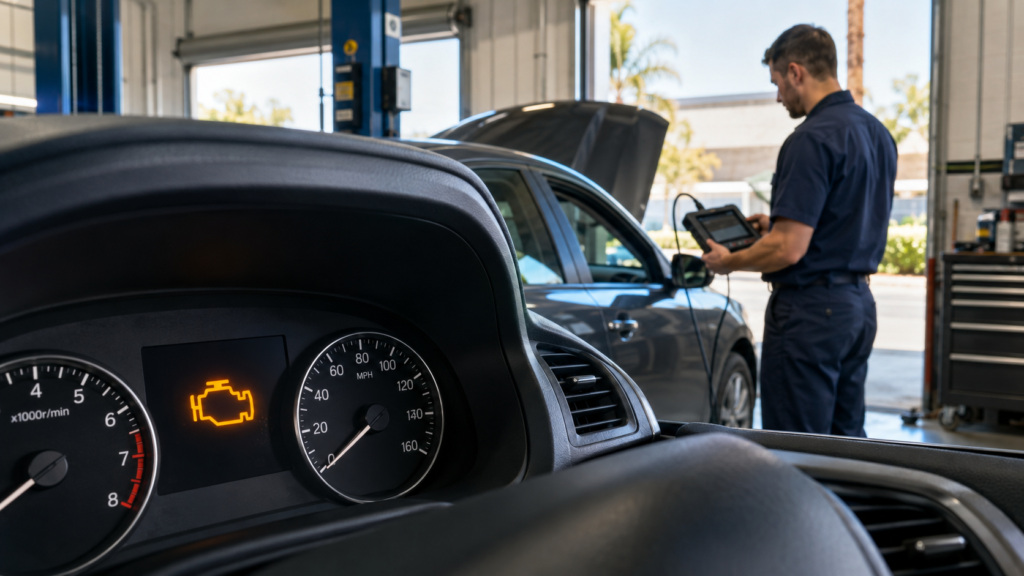
    Few dashboard warnings create as much uncertainty as the check engine light. It can appear when your vehicle seems to be running normally, or it may illuminate at the same time the engine begins shaking, losing power, or making an unusual noise. Because the light can indicate anything from a loose gas cap to a serious engine problem, it should never be ignored.

    Your vehicle’s onboard computer monitors many systems that affect engine performance, emissions, fuel efficiency, and drivability. When it detects a condition outside the expected range, it may store a diagnostic trouble code and turn on the check engine light.

    That code provides an important starting point, but it does not necessarily identify the exact part that needs replacement. Proper check engine light diagnostics involve evaluating the code, inspecting related components, reviewing vehicle data, and determining why the fault occurred.

    If your check engine light is on, contact Scott’s Auto Repair in Norco at 951.207.4387 to schedule a professional diagnostic inspection.

    💡 What Does the Check Engine Light Look Like?

    The check engine warning is usually yellow, orange, or amber. Depending on the vehicle, it may display an engine-shaped symbol or words such as “Check Engine” or “Service Engine Soon.”

    Drivers sometimes confuse the check engine light with a maintenance reminder. They serve different purposes.

    A maintenance reminder commonly appears when the vehicle reaches a mileage or time interval for routine service, such as an oil change. The check engine light usually means the vehicle’s computer has detected a problem involving a monitored system.

    The symbols and messages can vary among makes and models. If you are unsure which warning has appeared, consult your owner’s manual or ask a qualified repair professional.

    ⚠️ Is the Check Engine Light Steady or Flashing?

    One of the first things to notice is whether the light is staying on continuously or flashing.

    A Steady Check Engine Light

    A solid or steady light generally means the computer has detected a fault that should be diagnosed. The vehicle may still appear to drive normally, but that does not mean the problem is harmless.

    A steady light can be associated with an emissions issue, failing sensor, air or fuel problem, ignition fault, leak, or another condition that may become worse over time.

    If the vehicle is running normally and no other urgent warning signs are present, reduce unnecessary driving and arrange an appointment with Scott’s Auto Repair as soon as practical.

    A Flashing Check Engine Light

    A flashing check engine light requires immediate attention. It can indicate a severe misfire or another condition that may quickly damage the catalytic converter or other components.

    If the light is flashing:

    • Reduce speed and engine load
    • Avoid hard acceleration
    • Pull over safely as soon as conditions allow
    • Turn off the engine
    • Arrange for professional assistance or towing

    Do not continue driving simply to see whether the light stops flashing. If the engine is shaking, losing power, overheating, smoking, or producing a strong odor, shut the vehicle down in a safe location.

    For guidance, call Scott’s Auto Repair in Norco at 951.207.4387.

    🔍 Common Reasons the Check Engine Light Turns On

    There are many possible causes of an illuminated check engine light. The following are among the problems technicians frequently investigate.

    ⛽ Loose or Damaged Gas Cap

    A loose, missing, or damaged fuel cap can allow fuel vapors to escape from the sealed emissions system. This may cause the computer to detect an evaporative emissions leak and turn on the check engine light.

    After refueling, make sure the cap is tightened correctly. Inspect it for cracks, deterioration, or a damaged seal.

    A loose cap is one possible cause, but it should not be assumed to be the explanation for every warning light. Even if you tighten the cap, the warning may not disappear immediately. The vehicle may need to complete several self-checks before the computer turns off the light.

    If the warning remains on, professional diagnosis is the safest next step.

    🔥 Engine Misfire

    A misfire occurs when one or more cylinders fail to complete combustion properly. It may be caused by worn spark plugs, faulty ignition components, fuel-delivery problems, air leaks, mechanical issues, or other conditions.

    Possible symptoms include:

    • Rough idling
    • Shaking or vibration
    • Hesitation
    • Loss of power
    • Poor acceleration
    • Reduced fuel economy
    • A flashing check engine light

    Continuing to drive with a serious misfire may damage other components. A flashing light or severe engine vibration should be treated as urgent.

    🌬️ Oxygen Sensor Problems

    Oxygen sensors monitor the exhaust stream and provide information the vehicle’s computer uses to manage fuel delivery and emissions.

    A sensor problem can contribute to poor fuel economy, increased emissions, rough performance, or an illuminated warning light. However, a trouble code involving an oxygen sensor does not always mean the sensor itself is defective. Wiring problems, exhaust leaks, fuel-control issues, or other conditions may produce related codes.

    Testing is essential before replacing parts.

    ♻️ Catalytic Converter Concerns

    The catalytic converter helps reduce harmful substances in the vehicle’s exhaust. Converter efficiency can be affected by age, contamination, overheating, repeated misfires, or unresolved engine problems.

    Potential symptoms include:

    • Reduced engine performance
    • Poor acceleration
    • Unusual exhaust odors
    • Excessive heat underneath the vehicle
    • Reduced fuel economy
    • A check engine warning

    Replacing a catalytic converter without correcting the problem that damaged it may lead to another failure. The engine and fuel-control systems should be evaluated as part of the diagnosis.

    📏 Mass Airflow Sensor Issues

    The mass airflow sensor measures the amount of air entering the engine. The computer uses this information to calculate fuel delivery.

    A contaminated or faulty sensor may cause hesitation, poor fuel economy, hard starting, stalling, or rough performance. Air-filter problems, intake leaks, wiring faults, and other conditions may create similar symptoms.

    A technician can review sensor data and related systems to determine the actual cause.

    💨 Evaporative Emissions System Leaks

    The evaporative emissions system helps contain and manage fuel vapors. A loose gas cap is one possible source of a leak, but hoses, valves, seals, and other components can also fail.

    Some leaks are extremely small and may not create any noticeable driving symptoms. Specialized testing may be necessary to locate the source accurately.

    🔌 Ignition Coil or Spark Plug Problems

    Spark plugs and ignition coils help ignite the air-fuel mixture inside the engine. When one of these components is worn or failing, the engine may misfire, hesitate, shake, or lose power.

    Replacing the part named in a trouble code without testing the complete ignition system may not solve the problem. The fault could involve wiring, a connector, fuel delivery, compression, or another related condition.

    🧰 What Is a Diagnostic Trouble Code?

    When the vehicle’s computer detects a problem, it may store an alphanumeric diagnostic trouble code, often called a DTC. A scan tool can retrieve this code from the onboard diagnostic system.

    A common misconception is that the code directly tells the technician which part to replace. In reality, a code identifies the system, circuit, or operating condition in which the computer detected a fault.

    For example, a code may indicate a lean condition, misfire, sensor-circuit problem, or emissions leak. Several different failures could produce the same code.

    That is why simply reading or clearing the code is not the same as performing a complete diagnosis.

    🧑‍🔧 Why a Code Scan Is Not a Complete Diagnosis

    An inexpensive code reader may tell you which trouble code is stored, but it cannot automatically determine the underlying cause.

    Professional auto diagnostics in Norco may include:

    • Confirming the customer’s concern
    • Retrieving stored, pending, and historical codes
    • Reviewing freeze-frame information
    • Monitoring live sensor data
    • Inspecting wiring and electrical connectors
    • Testing circuits and components
    • Checking for intake or exhaust leaks
    • Evaluating ignition and fuel delivery
    • Performing mechanical tests when needed
    • Verifying the repair afterward

    A code related to a sensor could be caused by the sensor, wiring, a poor connection, another failed component, or a mechanical condition that caused the sensor to report an abnormal reading.

    Accurate testing helps prevent unnecessary parts replacement and allows the actual problem to be addressed.

    🚗 Can You Keep Driving with the Check Engine Light On?

    Whether it is safe to continue driving depends on the warning behavior and the vehicle’s symptoms.

    Stop driving and seek assistance if:

    • The check engine light is flashing
    • The engine is shaking severely
    • The vehicle is losing significant power
    • The temperature gauge shows overheating
    • An oil-pressure warning is illuminated
    • You see smoke
    • You smell fuel or burning material
    • The engine is making loud knocking or grinding noises
    • The vehicle is stalling or difficult to control

    If the light is steady and the vehicle appears to operate normally, you may be able to drive a short distance to a repair facility. However, schedule diagnosis promptly and avoid long trips, towing, heavy acceleration, or unnecessary driving until the cause is known.

    If you are uncertain, call Scott’s Auto Repair at 951.207.4387 before continuing to drive.

    🗑️ Should You Clear the Check Engine Light Yourself?

    Clearing a trouble code does not repair the condition that triggered it. If the fault remains, the light will often return.

    Erasing codes can also remove useful diagnostic information, including data captured when the fault occurred. Disconnecting the battery may reset certain vehicle settings and readiness monitors without correcting the problem.

    This can make diagnosis more difficult and may interfere with an upcoming emissions inspection. Before clearing the warning, allow a qualified technician to retrieve and document the stored information.

    ⛽ Can the Check Engine Light Affect Fuel Economy?

    Yes. Some faults can cause the engine to use more fuel than necessary. A problem involving air measurement, oxygen-sensor feedback, ignition, fuel control, or engine temperature may reduce efficiency.

    You may notice:

    • More frequent trips to the gas station
    • Rough idling
    • Sluggish acceleration
    • A fuel smell
    • Black exhaust smoke
    • Reduced performance

    Even when the vehicle seems normal, the computer may be compensating for a fault in a way that increases fuel consumption or emissions. Prompt diagnosis may help prevent wasted fuel and additional damage.

    🛡️ How Can You Help Prevent Check Engine Light Problems?

    Not every problem is preventable, but regular maintenance can reduce the likelihood of certain failures and help technicians identify developing issues earlier.

    Helpful maintenance habits include:

    • Following the manufacturer’s service schedule
    • Changing engine oil at the appropriate intervals
    • Replacing spark plugs as recommended
    • Inspecting and replacing air filters
    • Maintaining the cooling system
    • Using the correct fuel
    • Tightening the fuel cap after refueling
    • Addressing rough running or poor performance promptly
    • Repairing fluid leaks
    • Avoiding continued driving when the engine is overheating
    • Having warning lights professionally diagnosed

    Routine inspections can also reveal deteriorated hoses, damaged wiring, leaks, or worn ignition components before they cause more serious drivability problems.

    📍 Check Engine Light Diagnostics in Norco

    Drivers in Norco need vehicles they can depend on for commuting, errands, school transportation, work, and daily travel. An illuminated warning light can create uncertainty, especially when the car does not display obvious symptoms.

    At Scott’s Auto Repair, the goal of a diagnostic inspection is to identify the reason the warning appeared—not simply replace a part based on a code.

    A careful diagnostic process can help determine whether the problem involves ignition, fuel delivery, emissions controls, sensors, electrical circuits, air intake, exhaust, or an internal mechanical condition.

    The sooner the issue is evaluated, the better your opportunity to address it before it develops into a breakdown or more expensive repair.

    📞 Schedule Check Engine Light Service with Scott’s Auto Repair

    Do not cover the warning with tape, repeatedly clear the code, or wait for the vehicle to stop running. Your check engine light is the vehicle’s way of telling you that the onboard computer has detected a problem.

    If the light is steady, schedule professional diagnosis as soon as possible. If it is flashing or the vehicle is running poorly, stop driving when safe and arrange assistance.

    Contact Scott’s Auto Repair in Norco at 951.207.4387 for dependable check engine light diagnostics, professional auto repair, and friendly local service.

    Call 951.207.4387 today to schedule an appointment and get the answers you need before a warning light becomes a larger problem.

  • ❄️ Signs Your Car’s Air Conditioning Needs Repair Before Summer Gets Worse

    By Scott’s Auto Repair | Norco | 📞 951.207.4387

    Signs Your Car's Air Conditioning Needs Repair Before Summer Gets Worse

    Nothing can ruin a summer drive faster than an air conditioning system that stops blowing cold air. In Norco, where temperatures regularly climb during the summer months, your vehicle’s A/C system isn’t just about comfort—it’s an important part of making every drive more enjoyable and less stressful.

    Many drivers don’t realize their air conditioning system is developing a problem until it completely fails. Fortunately, most A/C issues begin with small warning signs that can be diagnosed and repaired before they become expensive.

    At Scott’s Auto Repair, we help drivers stay cool all summer with professional auto air conditioning repair in Norco. Here are the most common signs your vehicle’s A/C system needs attention.


    ☀️ Why Your Car’s Air Conditioner Matters

    Your vehicle’s air conditioning system does more than cool the cabin.

    A properly functioning A/C system helps:

    • Maintain driver comfort
    • Reduce fatigue on long drives
    • Improve visibility by removing humidity from windows
    • Create a more enjoyable ride for passengers
    • Protect sensitive electronics from excessive cabin heat

    Routine maintenance keeps the system operating efficiently throughout the hottest months of the year.


    🌬️ Warm Air Instead of Cold Air

    The most obvious sign of trouble is when the vents blow warm or only slightly cool air.

    This may be caused by:

    • Low refrigerant
    • Refrigerant leaks
    • A failing compressor
    • Electrical problems
    • A clogged expansion valve
    • A faulty condenser

    A professional inspection can quickly determine the cause.


    💨 Weak Airflow from the Vents

    If your blower is running but very little air comes through the vents, you may have:

    • A clogged cabin air filter
    • A failing blower motor
    • Damaged ventilation ducts
    • Electrical issues

    Weak airflow forces your system to work harder while reducing comfort.


    👃 Unpleasant Odors

    Musty or mildew-like smells often indicate moisture buildup inside the evaporator housing.

    This can lead to:

    • Mold growth
    • Bacteria buildup
    • Poor cabin air quality

    Cleaning the system and replacing the cabin air filter often restores fresh airflow.


    🔊 Strange Noises

    Clicking, squealing, rattling, or grinding noises when the A/C is running should never be ignored.

    These sounds may indicate:

    • Compressor wear
    • Loose pulleys
    • Damaged bearings
    • Internal compressor failure

    Early repairs can prevent complete compressor replacement.


    💧 Water Inside the Vehicle

    A small amount of water dripping underneath your parked vehicle is normal when the A/C is operating.

    However, water collecting inside the cabin may indicate:

    • A clogged evaporator drain
    • Blocked drain hose

    Ignoring this issue can damage carpets and encourage mold growth.


    ⚠️ Refrigerant Leaks

    Your air conditioning system is sealed and should not lose refrigerant during normal operation.

    Signs of a leak include:

    • Reduced cooling
    • Oily residue around A/C components
    • Hissing sounds
    • Frequent need for recharging

    Finding and repairing the leak is essential before adding refrigerant.


    🚗 Don’t Ignore Small Problems

    Minor A/C issues often become major repairs when ignored.

    Prompt service can prevent:

    • Compressor failure
    • Higher repair costs
    • Reduced cooling performance
    • Increased wear on other components

    Addressing problems early is almost always less expensive.


    🔧 Preventive A/C Maintenance

    Regular inspections help extend the life of your air conditioning system.

    Maintenance may include:

    • Refrigerant pressure testing
    • Leak detection
    • Cabin air filter replacement
    • Compressor inspection
    • Belt inspection
    • Performance testing
    • Condenser cleaning

    Preventive maintenance helps your A/C perform efficiently during Norco’s hottest days.


    ⭐ Why Choose Scott’s Auto Repair?

    Drivers throughout Norco rely on Scott’s Auto Repair because we provide:

    • Honest recommendations
    • Accurate diagnostics
    • Experienced technicians
    • Quality parts
    • Fair pricing
    • Friendly customer service

    Whether your A/C needs a simple recharge or a complete system repair, our team is committed to getting you back on the road comfortably.


    📞 Stay Cool This Summer—Schedule Your A/C Service Today

    Don’t wait until your vehicle’s air conditioner stops working on the hottest day of the year. If you’ve noticed weak airflow, warm air, strange noises, or unpleasant odors, let the professionals at Scott’s Auto Repair inspect your system before a minor issue becomes an expensive repair.

    Call 951.207.4387 today to schedule your auto A/C inspection and repair in Norco. We’re proud to provide honest service, expert diagnostics, and dependable repairs that keep you comfortable wherever the road takes you.


  • 🚗 Summer Car Maintenance Tips: Keep Your Vehicle Running Strong in Norco

    By Scott’s Auto Repair | Norco | 📞 951.207.4387

    Summer Car Maintenance Tips: Keep Your Vehicle Running Strong in Norco

    Summer in Southern California brings sunshine, road trips, and rising temperatures—but it also places extra stress on your vehicle. Whether you’re commuting around Norco or planning a weekend getaway, preparing your car for the heat is one of the best ways to avoid unexpected breakdowns and costly repairs.

    High temperatures can affect everything from your battery and cooling system to your tires and air conditioning. Following a few simple summer car maintenance tips can improve your vehicle’s reliability, increase safety, and help you enjoy worry-free driving all season long.

    At Scott’s Auto Repair, we’re committed to helping drivers in Norco keep their vehicles performing at their best. Here’s what every driver should check before the summer heat reaches its peak.


    ☀️ Why Summer Is Tough on Your Vehicle

    Many people associate vehicle problems with cold winter weather, but extreme heat can be just as damaging.

    Hot temperatures place added stress on:

    • Engine cooling systems
    • Batteries
    • Tires
    • Air conditioning systems
    • Belts and hoses
    • Fluids

    Ignoring routine maintenance during the summer months can lead to overheating, reduced fuel efficiency, tire failures, or expensive engine damage.


    🌡️ Inspect Your Cooling System

    Your engine produces a tremendous amount of heat every time you drive. The cooling system prevents that heat from damaging vital engine components.

    Have your cooling system inspected regularly, including:

    • Radiator
    • Coolant level
    • Water pump
    • Thermostat
    • Radiator hoses
    • Cooling fans

    Low coolant or a leaking radiator can quickly cause your engine to overheat, potentially leading to major repairs.

    If your temperature gauge begins climbing or you notice steam coming from under the hood, stop driving immediately and have your vehicle inspected.


    ❄️ Make Sure Your Air Conditioning Works Properly

    Few things are more uncomfortable than driving through a Norco summer without air conditioning.

    If your A/C is:

    • Blowing warm air
    • Producing weak airflow
    • Making unusual noises
    • Giving off unpleasant odors

    it’s time for an inspection.

    Your air conditioning system may simply need a recharge, or it could have a refrigerant leak or worn components that require repair.

    A properly functioning A/C system keeps you comfortable and helps prevent driver fatigue during hot weather.


    🔋 Test Your Battery

    Heat is one of the biggest enemies of automotive batteries.

    High temperatures accelerate internal chemical reactions and can shorten battery life.

    Watch for signs of battery problems:

    • Slow engine cranking
    • Dim headlights
    • Dashboard warning lights
    • Corroded battery terminals
    • Battery older than three years

    Having your battery tested before it fails can save you from getting stranded.


    🚙 Check Your Tires

    Summer heat increases tire pressure and accelerates tread wear.

    Before taking longer trips, inspect:

    • Tire pressure
    • Tread depth
    • Sidewall damage
    • Uneven wear

    Properly inflated tires improve:

    • Fuel economy
    • Handling
    • Braking
    • Tire lifespan

    Don’t forget to inspect your spare tire as well.


    🛢️ Change Your Engine Oil

    Oil lubricates moving engine parts while helping remove heat from the engine.

    Old or contaminated oil loses its protective properties, increasing engine wear.

    Follow your manufacturer’s recommended oil change intervals and have your oil checked regularly during the summer driving season.

    Routine oil changes are one of the easiest and most affordable ways to extend engine life.


    💧 Check All Vehicle Fluids

    Several fluids play an important role in keeping your vehicle operating safely.

    Have your mechanic inspect:

    • Engine oil
    • Coolant
    • Brake fluid
    • Transmission fluid
    • Power steering fluid
    • Windshield washer fluid

    Low or contaminated fluids can cause premature wear or system failure.


    🚦 Inspect Your Brakes

    Summer often means heavier traffic, family vacations, and longer drives.

    Reliable brakes are essential.

    Signs your brakes may need service include:

    • Squealing
    • Grinding
    • Soft brake pedal
    • Vehicle pulling while braking
    • Vibrations

    Brake inspections help identify worn pads and rotors before they compromise your safety.


    🔧 Examine Belts and Hoses

    Rubber components naturally deteriorate over time, and high temperatures speed up the aging process.

    Inspect belts and hoses for:

    • Cracks
    • Bulges
    • Soft spots
    • Fraying
    • Leaks

    Replacing worn belts and hoses before they fail can prevent unexpected roadside breakdowns.


    🚘 Replace Worn Windshield Wipers

    Although Southern California is known for dry summers, windshield wipers remain important.

    Dust, bugs, and occasional summer storms can reduce visibility.

    Replace wiper blades if they:

    • Leave streaks
    • Skip across the windshield
    • Squeak
    • Show signs of cracking

    Clear visibility is critical for safe driving.


    🔦 Check Exterior Lights

    Longer daylight hours don’t eliminate the need for functioning lights.

    Inspect your:

    • Headlights
    • Brake lights
    • Turn signals
    • Reverse lights
    • Hazard lights

    Proper lighting keeps you visible to other drivers, especially during early morning or evening travel.


    🧰 Prepare an Emergency Kit

    Even well-maintained vehicles can experience unexpected issues.

    Keep an emergency kit that includes:

    • Jumper cables
    • Flashlight
    • Water
    • First aid kit
    • Phone charger
    • Tire pressure gauge
    • Basic hand tools

    Being prepared can make an unexpected situation much easier to handle.


    🚗 Schedule Preventive Maintenance Before Your Next Trip

    If you’re planning a road trip, don’t wait until the day before departure to have your vehicle inspected.

    A professional maintenance inspection can identify developing problems before they become expensive repairs.

    Preventive service often includes:

    • Fluid inspection
    • Tire inspection
    • Brake evaluation
    • Battery testing
    • Cooling system inspection
    • Belt and hose inspection
    • Air conditioning performance check

    These simple inspections can provide peace of mind throughout the summer.


    ⭐ Why Choose Scott’s Auto Repair?

    Drivers throughout Norco trust Scott’s Auto Repair because we provide:

    • Honest recommendations
    • Experienced technicians
    • Accurate diagnostics
    • Quality repairs
    • Preventive maintenance
    • Friendly customer service
    • Competitive pricing

    Our goal is to help every customer enjoy safe, dependable driving throughout every season.


    📞 Schedule Your Summer Maintenance Today

    Don’t let summer heat leave you stranded on the side of the road. Following these summer car maintenance tips can help protect your vehicle, improve performance, and reduce the risk of unexpected repairs.

    Whether your vehicle needs an oil change, cooling system inspection, brake service, A/C repair, or a complete summer maintenance check, Scott’s Auto Repair is here to help.

    Call 951.207.4387 today to schedule your appointment. Our experienced technicians proudly serve drivers throughout Norco with honest service, expert repairs, and dependable maintenance that keeps your vehicle ready for every summer adventure.


  • 🚗 Norco Trusted Mechanic: Why Choosing the Right Auto Repair Shop Matters

    By Scott’s Auto Repair | Norco | 📞 951.207.4387

    When your vehicle needs maintenance or repairs, choosing the right shop can make all the difference. Whether it’s routine oil changes, brake service, engine diagnostics, or major repairs, working with a trusted mechanic in Norco ensures your vehicle stays safe, reliable, and on the road longer.

    At Scott’s Auto Repair, we understand that your vehicle is one of your biggest investments. That’s why we’re committed to providing honest recommendations, quality workmanship, and exceptional customer service for every vehicle that enters our shop. If you’re looking for a Norco trusted mechanic, here’s why choosing an experienced local repair shop is one of the smartest decisions you can make.


    🚘 Why Trust Matters in Auto Repair

    Finding a mechanic you can rely on provides peace of mind every time you drive.

    A trustworthy repair shop will:

    • Explain repairs clearly
    • Provide accurate estimates
    • Recommend only necessary services
    • Use quality replacement parts
    • Stand behind their work
    • Prioritize your safety

    When you have confidence in your mechanic, you never have to wonder whether you’re receiving honest advice or quality repairs.

    At Scott’s Auto Repair, building long-term relationships with customers is just as important as fixing vehicles.


    🔧 Comprehensive Auto Repair Services

    A dependable Norco trusted mechanic should be able to handle virtually every automotive need under one roof.

    At Scott’s Auto Repair, we provide services including:

    • Oil changes
    • Brake inspections and repairs
    • Engine diagnostics
    • Transmission service
    • Cooling system repairs
    • Radiator replacement
    • Battery testing and replacement
    • Starter and alternator repairs
    • Suspension and steering repairs
    • Air conditioning service
    • Factory scheduled maintenance
    • Check engine light diagnostics

    Having one trusted repair facility saves time while ensuring consistent service throughout your vehicle’s life.


    ⚠️ Signs It’s Time to Visit Your Mechanic

    Many vehicle problems begin with small warning signs that become more expensive if ignored.

    Schedule an inspection if you notice:

    • Check engine light illuminated
    • Strange engine noises
    • Vibrations while driving
    • Brake squealing or grinding
    • Poor fuel economy
    • Difficulty starting
    • Fluid leaks
    • Steering pulling to one side
    • Excessive exhaust smoke
    • Overheating

    Prompt repairs often prevent much larger—and more costly—problems later.


    🛠️ Preventative Maintenance Saves Money

    One of the biggest advantages of working with a Norco trusted mechanic is staying ahead of repairs.

    Routine maintenance helps prevent:

    • Engine damage
    • Transmission failure
    • Brake system problems
    • Cooling system breakdowns
    • Suspension wear
    • Electrical issues

    Regular inspections allow technicians to identify worn components before they fail, reducing unexpected breakdowns and repair bills.

    Preventative maintenance also improves fuel economy, vehicle performance, and resale value.


    🚙 Modern Vehicles Require Advanced Diagnostics

    Today’s vehicles rely on sophisticated electronics and onboard computers.

    Professional diagnostic equipment allows technicians to quickly identify issues involving:

    • Engine performance
    • Fuel systems
    • Emissions
    • Ignition systems
    • Transmission controls
    • ABS brakes
    • Airbag systems
    • Sensors
    • Electrical components

    Rather than replacing parts through trial and error, experienced technicians accurately diagnose the source of the problem, saving both time and money.


    🌡️ California Driving Takes a Toll on Vehicles

    Driving conditions throughout Norco can be demanding.

    Summer heat, stop-and-go traffic, long commutes, and highway driving all place extra stress on important vehicle systems.

    These conditions can accelerate wear on:

    • Batteries
    • Tires
    • Brakes
    • Cooling systems
    • Belts and hoses
    • Air conditioning components

    Routine inspections help identify potential issues before they leave you stranded during the hottest months of the year.


    🚦 Why Local Experience Matters

    Choosing a local repair shop offers benefits national chains often can’t match.

    Local mechanics:

    • Get to know your vehicle’s history
    • Build long-term customer relationships
    • Provide personalized recommendations
    • Offer consistent service
    • Understand local driving conditions
    • Value their community reputation

    Scott’s Auto Repair has earned the trust of drivers throughout Norco by delivering dependable repairs backed by honesty and experience.


    💰 Honest Estimates Without Unnecessary Repairs

    Unfortunately, many drivers worry about being pressured into repairs they don’t actually need.

    A trusted mechanic will:

    • Explain the problem in understandable language
    • Show damaged parts whenever possible
    • Prioritize repairs by urgency
    • Discuss available repair options
    • Respect your budget

    Transparency builds confidence and helps customers make informed decisions about their vehicles.


    🚗 Keep Your Vehicle Running Its Best

    Whether your vehicle has 20,000 miles or 200,000 miles, consistent maintenance plays a major role in reliability.

    Routine service helps:

    • Extend engine life
    • Improve fuel efficiency
    • Increase reliability
    • Reduce repair costs
    • Improve driving safety
    • Maintain resale value

    Working with one trusted repair shop also creates a complete service history that benefits future maintenance and resale.


    ⭐ Why Drivers Choose Scott’s Auto Repair

    Customers throughout Norco trust Scott’s Auto Repair because we focus on:

    • Honest recommendations
    • Experienced technicians
    • Accurate diagnostics
    • Quality workmanship
    • Fair pricing
    • Friendly customer service
    • Reliable repairs
    • Long-term vehicle care

    Our goal is to help every customer drive confidently, knowing their vehicle has been repaired correctly the first time.


    📞 Schedule Service with Your Norco Trusted Mechanic Today

    If you’re searching for a Norco trusted mechanic, Scott’s Auto Repair is ready to help. Whether your vehicle needs routine maintenance, diagnostics, brake service, engine repairs, or preventative inspections, our experienced team is committed to keeping you safely on the road.

    Don’t wait until a small issue becomes an expensive repair. Schedule your next service with Scott’s Auto Repair today by calling 951.207.4387. Our team proudly serves drivers throughout Norco with dependable automotive care, honest service, and quality repairs you can trust.