By Scott’s Auto Repair | Norco | 951.207.4387
Your brakes are among the most important safety systems in your vehicle. Every time you slow down for traffic, stop at an intersection, descend a hill, or respond to an unexpected hazard, you depend on the braking system to work correctly.
Brake components wear gradually, which can make changes in performance easy to overlook. A small squeak may become a loud grinding noise, a slight vibration may grow more noticeable, or the brake pedal may begin feeling softer over time. Waiting too long to address these symptoms can increase stopping distance, damage additional components, and create a serious safety concern.
Knowing the common signs your brakes need repair can help you respond before a minor service need becomes a larger problem.
If your brakes are making noise, vibrating, feeling different, or taking longer to stop the vehicle, contact Scott’s Auto Repair in Norco at 951.207.4387 to schedule a professional brake inspection.
🚗 How Does Your Vehicle’s Braking System Work?
When you press the brake pedal, the braking system converts the vehicle’s motion into heat through friction. In a typical disc-brake system, hydraulic pressure pushes the brake pads against the rotors. This friction slows the wheels and brings the vehicle to a stop.
Depending on the vehicle, the braking system may include:
- Brake pads
- Brake rotors
- Brake calipers
- Brake fluid
- Brake hoses and lines
- A master cylinder
- A brake booster
- Wheel-speed sensors
- An anti-lock braking system
- Parking-brake components
- Rear drum brakes on some vehicles
All these components must work together. A noise or change in braking performance may involve worn pads, but it could also point to a rotor, caliper, hydraulic, sensor, or suspension problem.
That is why a complete brake inspection in Norco is more reliable than replacing parts based on one symptom.
🔊 1. Your Brakes Squeak or Squeal
A high-pitched squeaking or squealing sound is one of the most familiar signs of possible brake wear.
Some brake pads include wear indicators designed to make noise when the friction material becomes thin. This sound alerts the driver that the pads should be inspected and may need replacement.
However, brake squeaking does not always mean the pads are completely worn out. Moisture, dust, surface rust, glazing, vibration, brake-pad material, or installation issues can also create noise.
Occasional light noise after rain or when the vehicle has been parked may disappear after a few stops. Persistent, increasingly loud, or recurring squeaking deserves professional attention.
Do not rely on noise alone to determine brake condition. Some worn pads may produce little or no warning before damage occurs.
⚙️ 2. You Hear Grinding When Braking
A grinding sound should be treated as urgent. It may mean the brake-pad material has worn away enough for metal components to contact the rotor.
Metal-on-metal contact can reduce braking effectiveness and quickly damage the rotors. It may also generate excessive heat and place additional stress on the calipers and other components.
Grinding may have other causes, including debris, damaged hardware, or a mechanical problem, but it should never be ignored.
If you hear grinding:
- Reduce unnecessary driving
- Avoid high speeds and heavy braking
- Pull over if braking performance is affected
- Arrange an inspection as soon as possible
- Use towing if the vehicle does not feel safe
Call Scott’s Auto Repair at 951.207.4387 for assistance with grinding brakes in Norco.
🦶 3. The Brake Pedal Feels Soft or Spongy
A healthy brake pedal should feel consistent and responsive. If the pedal feels unusually soft, spongy, or easier to push than normal, there may be air in the hydraulic system, deteriorated brake fluid, a leak, a failing hose, a master-cylinder problem, or another hydraulic fault.
A pedal that gradually sinks toward the floor while you maintain pressure is also concerning.
Brake-fluid leaks can reduce the hydraulic pressure needed to apply the brakes. Unlike engine oil, brake fluid is not consumed during normal operation. A low fluid level may indicate worn brake components or a leak that requires inspection.
A significant change in pedal feel can be a safety emergency. If the pedal goes close to the floor, braking ability is reduced, or the vehicle does not stop normally, do not continue driving. Move to a safe location if possible and arrange towing.
🧱 4. The Brake Pedal Feels Hard
A brake pedal that is unusually difficult to press may indicate a problem with the brake booster, vacuum supply, hydraulic system, or another component.
Drivers may notice that stopping requires much more physical effort than usual. The brakes may still respond, but the vehicle can become harder to control during an emergency stop.
A hard pedal should not be dismissed as a minor comfort issue. Increased pedal effort may affect your ability to stop quickly and predictably.
Schedule a professional inspection with Scott’s Auto Repair in Norco before the condition becomes worse.
📳 5. The Vehicle Vibrates When You Brake
A pulsing brake pedal or shaking steering wheel during braking can indicate a problem involving the brake rotors.
Rotors can develop thickness variation, uneven wear, heat-related surface changes, or other conditions that affect how smoothly the brake pads contact them. A sticking caliper or improper wheel-fastener torque may contribute to rotor problems.
Vibration can also be related to:
- Worn suspension components
- Steering-system problems
- Tire or wheel issues
- Loose or damaged components
- Anti-lock brake operation during a hard stop
Anti-lock brake pulsation during an emergency stop can be normal. Regular vibration during routine braking is not and should be inspected.
The speed at which the vibration occurs and whether it is felt through the pedal, steering wheel, or entire vehicle can help a technician locate the cause.
↔️ 6. The Vehicle Pulls to One Side While Braking
Your vehicle should remain reasonably straight and controlled when you apply the brakes. Pulling to one side may indicate uneven braking force.
Potential causes include:
- A sticking brake caliper
- Contaminated brake-pad material
- Uneven pad or rotor wear
- A restricted brake hose
- A hydraulic problem
- Tire-pressure differences
- Alignment or suspension concerns
A severe pull can make the vehicle difficult to control, especially during sudden braking or on a wet road.
Because steering, tire, suspension, and brake problems can produce similar symptoms, professional inspection is necessary to identify the source.
⏱️ 7. The Vehicle Takes Longer to Stop
An increase in stopping distance is one of the most important warning signs of a braking problem. You may notice that you need to press the pedal earlier, apply more force, or leave more room than before.
Reduced braking performance can be caused by:
- Worn brake pads
- Overheated brakes
- Contaminated friction surfaces
- Hydraulic problems
- Poor-quality or incorrect components
- A brake booster problem
- Worn tires
- Wet or slippery road conditions
- Excessive vehicle weight
If the vehicle does not slow down normally, treat the condition as urgent. Avoid driving the vehicle and arrange for professional service.
Never test questionable brakes by driving at high speed or performing aggressive stops.
💡 8. The Brake Warning Light Is On
Vehicles may have several brake-related dashboard indicators. A red brake warning light can be associated with the parking brake, low brake-fluid level, or a hydraulic-system problem. An amber anti-lock braking system light may indicate a fault within the ABS.
Some vehicles also provide an electronic brake-pad wear message.
If a brake warning appears:
- Make sure the parking brake is fully released.
- Note the color and exact symbol.
- Pay attention to pedal feel and stopping performance.
- Consult the owner’s manual.
- Schedule an inspection promptly.
If a red warning remains illuminated or appears with poor braking performance, stop driving when it is safe and arrange towing.
A warning light should not be cleared or ignored without determining why it appeared.
👃 9. You Smell Something Burning
A sharp chemical or burning smell after repeated braking may indicate that the brakes are overheating. This can happen during prolonged downhill driving, aggressive braking, towing, or when a caliper or parking-brake component is sticking.
Overheated brakes may temporarily lose effectiveness, a condition sometimes called brake fade.
If you suspect overheating:
- Pull over in a safe location
- Stop the vehicle
- Allow the brakes to cool naturally
- Do not touch the wheels or brake components
- Do not pour water on hot brakes
- Seek professional assistance if the smell persists or braking changes
Smoke near a wheel or an extremely hot wheel area may indicate a serious problem. Do not continue driving.
🛞 10. One Wheel Produces Excessive Brake Dust
Brake dust is a normal byproduct of friction, but a large difference between wheels can suggest uneven pad wear or a sticking caliper.
A brake that does not release completely can remain in contact with the rotor. This may create excessive heat, rapid wear, reduced fuel economy, pulling, odors, or damage to nearby components.
One wheel may also feel hotter than the others after driving, but never touch the wheel or brake assembly to check. Brake components can become hot enough to cause severe burns.
A technician can compare brake wear, verify caliper movement, and inspect the hydraulic system safely.
🔨 11. You Hear Clunking or Clicking
Clicking, clunking, or rattling when the brakes are applied may involve loose or damaged brake hardware, improperly fitted pads, caliper movement, suspension components, or another mechanical issue.
These sounds may become more noticeable when:
- Changing direction
- Driving over bumps
- Applying or releasing the brakes
- Turning
- Braking at low speed
Loose components can affect braking consistency and should be inspected before additional damage occurs.
🅿️ 12. The Parking Brake Does Not Hold
The parking brake helps keep a stationary vehicle from moving. Depending on the vehicle, it may be operated by a pedal, hand lever, or electronic switch.
Signs of a parking-brake problem include:
- The vehicle rolls when the brake is applied
- The lever or pedal has excessive travel
- The brake will not release
- An electronic parking-brake warning appears
- The parking brake operates intermittently
- Grinding or dragging occurs after release
Parking-brake systems can use cables, actuators, switches, motors, shoes, or caliper mechanisms. The correct inspection method depends on the vehicle design.
Do not rely solely on the transmission’s Park position when a parking brake is not working correctly, especially on an incline.
📏 How Long Do Brake Pads Last?
There is no single replacement interval that applies to every vehicle. Brake-pad life depends on driving habits, vehicle weight, component design, road conditions, traffic, terrain, pad material, and maintenance.
Brakes may wear more quickly when a vehicle is frequently driven in:
- Stop-and-go traffic
- Hilly areas
- Heavy commuter traffic
- Towing conditions
- Delivery or commercial service
- Short trips with repeated braking
A driver who anticipates traffic and slows gradually may obtain different brake life than someone who brakes late and aggressively.
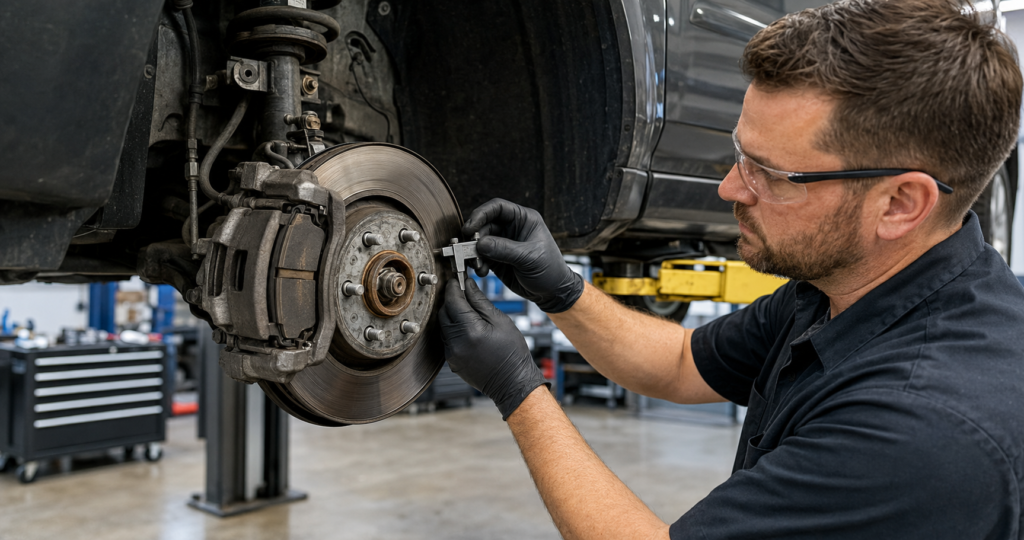
Mileage alone should not determine whether brakes are safe. Measuring the remaining friction material and inspecting the complete system provides a more accurate assessment.
🔍 What Happens During a Brake Inspection?
A professional brake inspection may include evaluating:
- Brake-pad or shoe thickness
- Rotor or drum condition
- Caliper operation
- Brake-fluid condition and level
- Hydraulic hoses and lines
- Master-cylinder performance
- Brake-pedal feel
- Parking-brake operation
- Warning lights and stored fault codes
- ABS sensors and related wiring
- Uneven wear patterns
- Signs of leakage, overheating, or contamination
A complete inspection helps determine whether the vehicle needs brake pads, rotors, hydraulic service, hardware, caliper work, or another repair.
Not every brake noise requires the same service. Accurate inspection helps avoid unnecessary parts replacement while ensuring safety-related problems are addressed.
🧰 Brake Pads, Rotors, and Calipers: What Is the Difference?
Brake pads provide the friction material that presses against the rotors. They are designed to wear and require periodic replacement.
Brake rotors are metal discs attached to the wheel hubs. The pads clamp against them to slow the wheels. Rotors must remain within safe thickness and condition specifications.
Brake calipers use hydraulic pressure to apply the pads. A caliper that sticks, leaks, or fails to move correctly can create uneven wear and reduced braking performance.
Replacing pads without inspecting the rotors, calipers, and hardware can leave an underlying problem unresolved. Brake service should be based on measurements, condition, and manufacturer specifications.
🚫 What Happens If You Delay Brake Repair?
Postponing brake service can allow a relatively manageable repair to become more extensive.
For example, driving after the friction material has worn away can damage the rotors and possibly the calipers. A hydraulic leak can progress until the brake pedal loses pressure. A sticking caliper may overheat the rotor, damage the pad, and affect the wheel area.
Delaying repairs may result in:
- Longer stopping distances
- Reduced vehicle control
- Damage to additional components
- Uneven brake wear
- Overheated brakes
- More expensive repairs
- An increased risk of a collision
Brake symptoms do not reliably improve on their own. If a sound or performance change appears, schedule an inspection.
🛡️ How Can You Help Your Brakes Last Longer?
Although brake components eventually wear, good driving and maintenance habits may help extend their service life.
- Leave adequate following distance
- Anticipate stops instead of braking suddenly
- Avoid carrying unnecessary weight
- Use an appropriate lower gear on long descents when recommended
- Do not ride the brake pedal
- Address pulling or dragging promptly
- Maintain tires and suspension components
- Follow the vehicle’s maintenance schedule
- Have the brakes inspected when symptoms appear
- Use components appropriate for the vehicle
Never sacrifice safety simply to extend brake-pad life. Use the brakes whenever necessary to control the vehicle and avoid hazards.
🚨 When Should You Stop Driving Immediately?
Stop driving and arrange professional assistance if:
- The brake pedal goes to the floor
- The vehicle does not stop normally
- A red brake warning remains illuminated
- Brake fluid is leaking
- You hear severe grinding
- The vehicle pulls sharply under braking
- Smoke comes from a wheel area
- The brakes smell strongly burned
- The pedal suddenly becomes extremely hard or soft
- Braking control changes dramatically
If braking ability begins to fail while driving, remain calm, activate the hazard lights, reduce speed safely, and move away from traffic when possible. Once stopped, do not continue driving the vehicle.
📞 Schedule Brake Repair with Scott’s Auto Repair
Squeaking, grinding, vibration, pulling, warning lights, unusual pedal feel, and increased stopping distance are all signs that your brakes may need professional attention.
At Scott’s Auto Repair in Norco, your braking system can be inspected to determine which components require service. Addressing brake problems early can help protect rotors, calipers, hydraulic components, and—most importantly—the safety of everyone in the vehicle.
Call us today at 951.207.4387 to schedule a brake inspection in Norco, brake-pad service, rotor evaluation, or professional brake repair.